
The panel agreed private credit is already mainstream. The lawyer said the real work begins after that
Francesco Vitulano of Blackstone Credit, Gregorio Consoli of Chiomenti, Marco Prono of JP Morgan and Roberto Ippolito of Clessidra Private Debt closed Mergermarket's Italy forum by arguing that hybrid capital is no longer alternative — and then explaining why the Italian market is still several years behind the conversation.
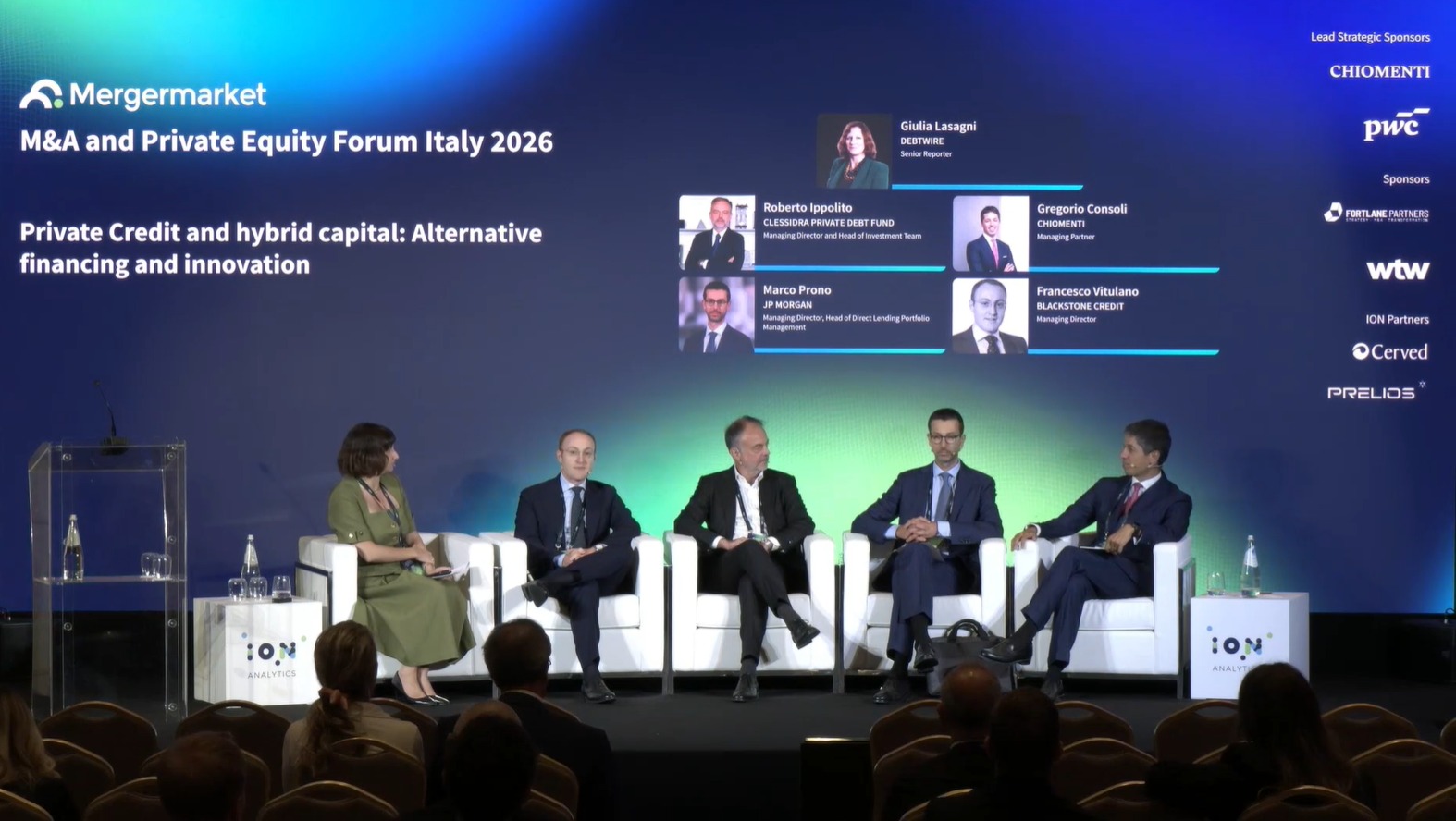
Marco Prono of JP Morgan opened with a distinction he finds underused: whether the borrower is a private equity-owned company or a family-run one changes everything about what private credit can and cannot achieve. PE-backed companies understand credit instruments; entrepreneurial ones tend to treat a non-bank lender as a partner of last resort, which means the term sheet is the easy part and the relationship architecture is the hard part.
Gregorio Consoli of Chiomenti added that the legal toolkit has caught up — from almost nothing to a fully continuous spectrum between debt and equity in twenty-five years — but the exercise most often requires alignment on five things: coupon; principal treatment; governance and decision rights; participation in future upside; and exit mechanics. When those five are coordinated with the company's actual plan, value is created; when they are not, it is not.
Roberto Ippolito of Clessidra Private Debt focused on the mid-market opportunity that institutional credit has historically underserved: companies too large for standard bank financing and too small for sponsor-backed unitranche, where succession dynamics and generational change are creating demand. Francesco Vitulano of Blackstone Credit gave the longer view: the majority of Italian private credit to date has been direct lending to sponsor-backed companies, and that will continue, but the growth opportunities are in non-sponsor corporates and, further out, in asset-based finance. The global private credit market is roughly $2 trillion; the addressable market when infrastructure, real assets and the financing need of the digital and energy transitions are included is closer to $30 trillion.
Prono's closing provocation drew from engineering: the real advance is not in naming a new instrument but in ensuring that a CFO — human or AI — knows which instrument matches which need. A company making a long-duration defence investment needs different capital than one running a technology upgrade. The taxonomy is the start; the discipline is knowing when to use which tool.
Key takeaways: For direct dialogue with Italian entrepreneurs, build relationship time into the deal timeline before the term sheet — the hesitation is not financial, it is about control, succession and what happens when the plan does not go as projected. Model the five capital-structure alignment points — coupon, principal, governance rights, upside participation, exit — before presenting a hybrid structure to an entrepreneurial seller; misalignment on any one creates the tension that makes these deals long to close. The next Italian private credit growth market is non-sponsor SMEs and asset-based finance, not incremental sponsor-backed unitranche.